Static Control
Static Control for Glue Application on Cardboard Boxes
Key Takeaways
- Static alters glue bead trajectory, causing misalignment and weak carton seams.
- Low humidity and high speed increase charge on corrugated board and adhesive.
- Charged surfaces attract dust/fibers, contaminating bonds and reducing adhesion.
- Use inline static elimination (balanced ionizers like SJ-Q) at sealing points to stabilize glue application.
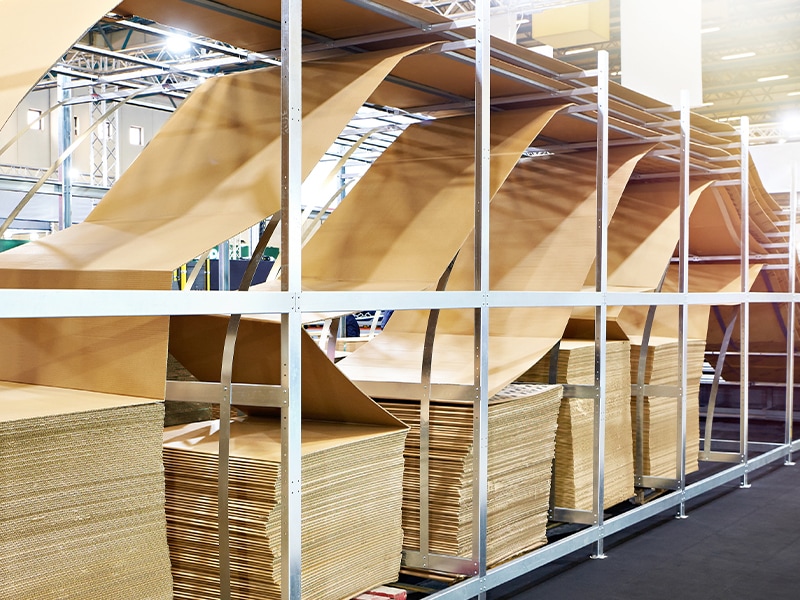
Static electricity in cardboard box production can interfere with one of the most important stages of carton assembly: adhesive application. During the high-speed process of carton forming and sealing, both corrugated cardboard and hot melt adhesives are exposed to conditions like friction and dry air. These, and other factors, can generate static electricity.
When left unmanaged, electrostatics can influence bead placement and bond quality. Static control for packaging glue application helps address these variables at their sources to support consistent carton performance.
Why Static Electricity Affects Glue Application Accuracy
Glue application relies on controlled dispensing. Industrial systems are calibrated to deposit a defined bead along the flap seams of a cardboard carton at different speeds and pressures. When static electricity in cardboard box production is present, any electrostatic field surrounding the substrate will alter how the glue behaves in flight.
A static charge on cardboard boxes can attract or repel the adhesive bead as it exits the nozzle. This interaction can contribute to glue misalignment caused by static, particularly at higher conveyor speeds. Electrostatic issues in packaging lines become more of an issue when lightweight corrugated cardboard has to move rapidly through folding and sealing stations.
If glue shifts, it will rarely be uniform. Misaligned glue beans are often accompanied by uneven edge coverage or a slight drift towards areas of the substrate that hold on to static charge. These patterns can often be traced back to electrostatic rather than mechanical misalignment.
Static elimination for adhesive accuracy helps reduce that interference, and, once the charge is neutralized, the adhesive follows a steadier and more consistent path without increasing glue output or having to change pressure settings.
How Cardboard and Glue Become Electrically Charged
Static electricity in cardboard box production develops during regular material handling as corrugated cardboard boxes are separated from stacks and guided over rollers; they are also compressed during folding and conveyed across belts.
Dry production environments serve to amplify the effect. Corrugated board is an insulating material that allows charges to accumulate and persist rather than allowing them to dissipate quickly.
Hot melt adhesives are also affected; as glue is pumped and forced through nozzles, friction within the system can contribute to a localized charge. When both the adhesive and the substrate can carry charge, any electrostatic interactions will influence glue bead behavior. Electrostatic issues in packaging lines, therefore, originate from normal processes rather than isolated anomalies.
The Impact of Static on Adhesion and Box Assembly
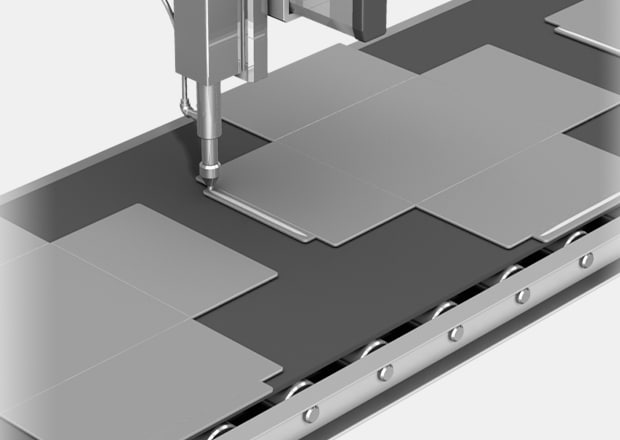
Glue misalignment caused by static can affect more than just the visual appearance of a finished box. Adhesive bonding depends on uniform contact between the bead and the surface of the cardboard. When electrostatic forces shift the bead away from the intended seam location, the bond width can narrow or become uneven.
A static charge of cardboard boxes also attracts airborne dust and paper fibres into the bonding area. When contamination is trapped in the adhesive layer, it reduces direct fiber-to-fiber contact between surfaces.
Electrostatic issues on packaging lines may also present as intermittent carton opening or elevated scrap rates. In high-volume operations, small deviations in bead placement can quickly become huge issues. Static elimination for adhesive accuracy supports production lines, creating stable bonds by neutralizing charge before the adhesive has contact with the surface of the box.
Conventional Countermeasures
Humidifier
- The effect is insufficient.
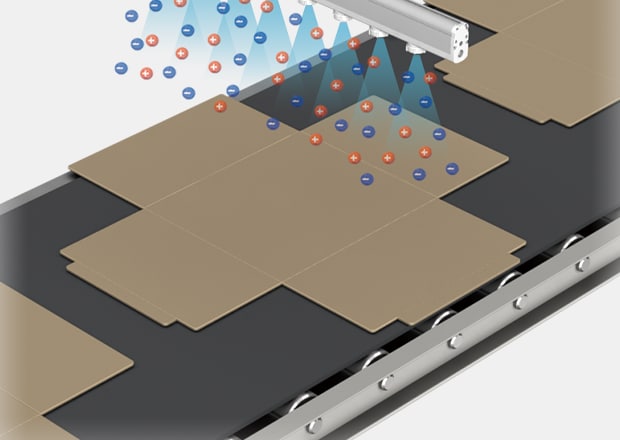
Countermeasures with Static Eliminators (Ionizers)
An ionizer can reduce defective boxes significantly, which helps prevent complaints.
Reduced Cost for Preventing the Release of Defective Products
Since customer complaints lead to significant losses, including the cost of process improvement and lowered levels of trust in the company, it was crucial to improve the matter.
KEYENCE Static Eliminators for Consistent Application
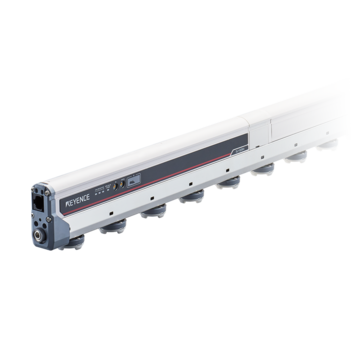
Active ionization neutralized the static charge on cardboard boxes and in the surrounding air. KEYENCE ionizers emit balanced positive and negative ions that combine with charged surfaces to bring them into a neutral state to provide targeted static control for packaging glue applications directly at sealing stations.
The SJ-Q Series High-Accuracy High-Speed Sensing Ionizer delivers rapid static elimination and a tight ion balance. Electric field shielding technology minimizes voltage fluctuations on the targeted surface, which allows ions to reach the cardboard surface. Close mounting capability supports any installations near adhesive application points without inducing reverse charging.
Proven Results in Packaging Line Efficiency
Static elimination for adhesive accuracy not only improves a packaging line's stability at the point of application but, when static electricity is neutralized, any applied glue beads land on target instead of drifting. That means fewer cartons are compromised due to weak seams, and fewer surprise cases move through the rest of the line.
With static charge on cardboard boxes neutralized, adhesive settings can remain consistent throughout production and no longer need to increase outputs or adjust patterns to compensate for bead drift, and placement holds its position along the intended seam. This stability helps reduce variation from carton to carton and supports steady throughput without having to unnecessarily consume adhesive.
Explore static solutions for cardboard glue application with KEYENCE today!