Static Control
The SK-3000: Turning Static Monitoring Into Actionable Data
Key Takeaways
- Inline continuous monitoring captures transient static events missed by periodic checks.
- ±1.0 V accuracy and 1.4 ms sampling detect millisecond electrostatic changes.
- Temp and humidity data let analysis account for environmental effects on charge decay.
- Network/PLC outputs and CSV export make measurements actionable for OEE and traceability.
One consistent element that exists in manufacturing across across many industries is that production lines produce static electricity. Friction happens between materials like films, wafers, carriers, and rollers, creating static charges that can discharge at any time. Many facilities rely on periodic checks of the line to determine and understand electrostatic conditions. This approach can be effective, but it leaves room for gaps to develop between measurements, especially in high-speed environments.
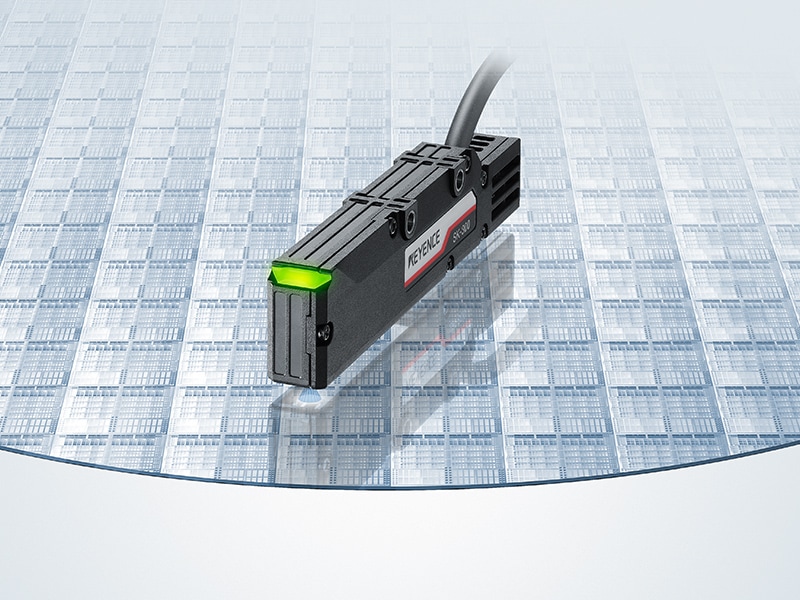
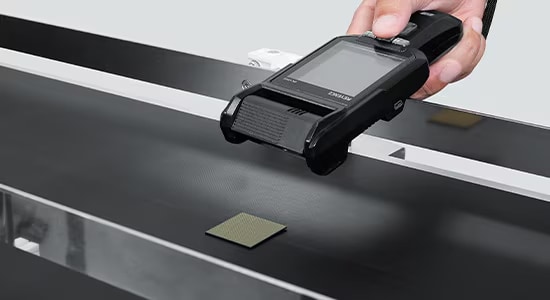
The SK-3000 electrostatic sensor addresses this by transforming static monitoring into a continuous source for operational data. Rather than capturing periodic electrostatic samples with handheld meters, this system enables inline electrostatic measurements directly on the targeted surface during production. The result is not just voltage information. This process provides visibility that supports measurable performance improvement.
Introducing the SK-3000 Electrostatic Sensor
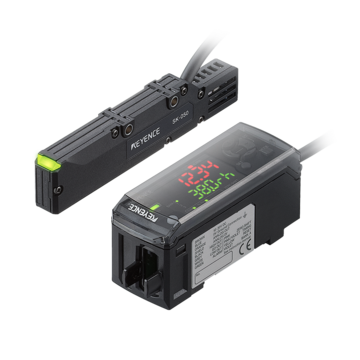
The SK-3000 electrostatic sensor is designed to be installed in-line with continuously operating production lines. It measures the electrostatic charge of the target itself, rather than just relying on an estimate of overall conditions.
With ±1.0 V measurement accuracy and a 1.4 ms sampling speed, the SK-3000 electrostatic sensor operates as a high-accuracy static sensor capable of detecting changes that occur during high-speed operations or with automated handling systems. These specifications help position the device as the go-to sensor for dynamic manufacturing environments.
Unlike handheld instruments that provide snapshots of trends, inline electrostatic measurement through the SK-3000 captures on-site static electricity volume, as well as the temperature and humidity simultaneously. This combination of sensors allows electrostatic data analysis to account for environmental variables that influence charge generation and decay.
New Possibilities With the SK-3000
Before
After
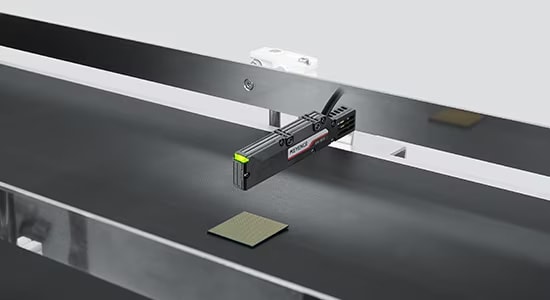
Communication capabilities extend the role of the SK-3000 beyond just measurements. Analog outputs and network connectivity allow these electrostatic data analyses within PLCs, and up to eight units can transmit data through a communication unit to provide a broader range of data across production lines.
Why Static Data Matters in OEE Optimization
Overall equipment effectiveness (OEE) depends on reliable information about production behavior. Availability, quality, and performance are all influenced by many factors, and electrostatic conditions are often one of them. Static discharge can cause visible defects in a finished product, but more often than not, it can contribute to latent damage or unstable processing conditions. These issues may not sound any alarms immediately, but they do affect yield and uptime.
Static monitoring for OEE improvement requires more than just the occasional verification. When checks are only performed periodically, transient static charge spikes go unrecorded. While all production lines can fall victim to these, high-speed operations amplify that risk. Triboelectric charging during material transfers can occur within milliseconds, and the static charge decay can vary with humidity. Without continuous static monitoring, these events will be invisible to OEE reporting.
The SK-3000 electrostatic sensor supports static monitoring for OEE improvement by feeding real-time charge data into production systems. Inline electrostatic measurement captures any static charge behavior during actual operating conditions, including machine start-ups, changeovers, and peak throughput times. This provides a much more accurate representation of how electrostatic variables influence scrap rates or downtime events.
Static monitoring of OEE improvement also benefits from correlation with environmental data. Because the SK-3000 electrostatic sensor measures temperature and humidity alongside surface potential, electrostatic data analysis can reveal patterns that relate to shifts in seasonal weather or other localized climate variations.
Real-Time Insights for Smarter Production Decisions
Collecting voltage values alone do not improve production. The advantage lies in how those values are interpreted and applied. Continuous static monitoring creates a live stream of information that can trigger any necessary corrective actions before defects are allowed to accumulate.
The SK-3000 electrostatic sensor supports inline electrostatic measurement that feeds directly into control systems. Operators can set thresholds through judgment output that can detect abnormal static charge levels. When a deviation does occur, signals can be transmitted to PLCs for response. This shortens the interval between detection and intervention.
Electrostatic data analysis becomes more effective with the SK-3000 as it stores data chronologically. It allows the export of measurement data in formats like CSV, enabling review of trends over time. Engineers can evaluate static charge behavior before and after they adjust a process, including ionizer tuning or material changes.
Static monitoring for OEE improvement benefits from this immediatly. When charge spikes correlate with minor stops or quality fluctuations, the relationship between them becomes clear. Continuous static monitoring makes it possible to identify whether a drop in performance aligns with increased surface potential. Inline electrostatic measurement, therefore, supports faster root cause identification.
Real-time electrostatic data analysis also reduces reliance on manual inspection, which minimizes the risk of errors involved with those manual checks. Instead of periodic checks requiring operator intervention, the high-accuracy static sensor operates during normal production.
Advantages of High-Speed, High-Accuracy Sensing
Electrostatic events do not occur slowly and over time. Static charges can build up as soon as machinery starts running or when materials are separated by equipment. In automated handling systems, devices may come in contact with conductive elements within milliseconds. A high-accuracy static sensor must respond quickly and measure precisely.
Electrostatic conditions can change within a single production cycle. As materials move along the line, surface potential for static buildup may rise and decay in fractions of a second, and a measurement system must follow those shifts without lag or signal distortion. The SK-3000 electrostatic sensor helps maintain stability during these rapid transitions to allow electrostatic data analysis to reflect the actual process behavior rather than just working from an average or delayed reading.
Signal integrity also plays a role in inline electrostatic measurement systems. Variations in drive power or environmental interference can distort any readings in less advanced systems. The SK-3000 electrostatic sensor incorporates circuitry that reduces distortion and supports consistent electrostatic data analysis across a variety of different operating conditions.
High-speed sensing is particularly relevant in applications where reflective or conductive materials are present. Measurement systems have to be able to maintain themselves despite moving targets and environmental fluctuations. Continuous static monitoring with a high-accuracy static sensor helps provide visibility under these conditions.
Integrating SK-3000 Data Into Continuous Improvements
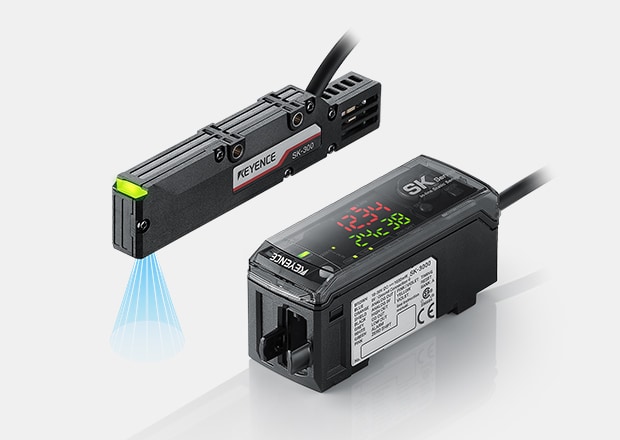
Measurement data becomes actionable data when it integrates with process workflows. The Sk-3000 electrostatic sensor is designed to operate within manufacturing networks.
When electrostatic measurements are captured at defined control points, the process behavior becomes a traceable data point rather than an anecdotal one.
Static charge patterns can be reviewed against material changes or maintenance events. Instead of asking whether static contributed to a deviation, teams can now examine recorded electrostatic data and confirm the sequences of events.
Static monitoring for OEE improvement can use historical data comparisons of charge levels across shifts or equipment configurations. Electrostatic data analysis supports refinement processes by revealing trends that would otherwise remain hidden.
Supervisory systems allow the SK-3000 electrostatic sensor to function as a larger part of a control strategy. When abnormal charge levels are detected, automated responses can adjust ionizer settings or flag maintenance review. This shortens the response time and supports a more stable production output.
Continuous static monitoring also improves product traceability. When quality issues arise, any archived data from the high-accuracy static sensor provides context. Engineers can review electrostatic conditions during an effective production window, and, therefore, inline electrostatic measurements can contribute to both preventative and retrospective analysis.
Explore the SK-3000 Sensor in action today with KEYENCE.