Continuous Inkjet Printers / Case Coder
CIJ Coding Solutions for Fruit and Vegetable Packaging
Fruit and vegetable packaging operates under conditions that are far less predictable than many other food categories. Products may be washed, cooled, sorted, repacked, or staged for storage before they ever reach a final case. Continuous inkjet (CIJ) coding takes place inside that movement. It occurs while the product is still being handled, as packaging surfaces change, and while line conditions fluctuate throughout the day. In this context, inkjet coding for fruit and veg packaging becomes part of production control rather than a final labeling step.
KEYENCE CIJs for the food and beverage industry offer high-quality, reliable lot coding and marking, ensuring traceability and product quality.
Reliable Coding for Fresh and Processed Produce
Fresh produce and processed produce place different demands on packaging lines, even when traceability requirements overlap. Fresh items move quickly through production, often while surfaces still retain moisture from washing or misting. On the other hand, processed and frozen products, like those in microwaveable bags, introduce colder temperatures and longer holding periods before shipment.
Reliability in this setting is less about peak output and more about consistency. Printers for fruit and vegetable coding have to be able to handle restarts, product changes, and environmental shifts without extended intervention. Expiry and batch codes need to align with production records, whether the product moves directly to distribution or enters storage for later use.

Reliable Inkjet Marking for Fruit and Vegetable Packaging
Produce packaging brings a variety of materials into everyday operation. This happens often within the same production window, and flexible films behave differently at print than coated cartons, while corrugated cases absorb ink in ways rigid containers do not. As products move between machines, orientation can change; this is particularly true when packaging formats rotate during seasonal runs.
Printers for fruit and vegetable coding are commonly used in these environments. Non-contact printing continues to function as those variables change, without requiring fixed alignment at each transition. High-speed CIJ for produce bags allows variable data to be applied in-line while packaging remains in motion. This fresh produce traceability printing supports short runs and schedule changes without pushing adjustments back into pre-printed materials or slowing the line.
Flexible Plastics
Whether it’s LLDPE, HDPE, PVC, or other flexible plastic materials, the MK-G Series can accurately create marks to ensure traceability.
Shrink Wrap
The MK-G Series is a great solution for PVC or bio-based shrink-wrap packaging, as they add precise information and streamlines supply chain tracking.
Pouches and Bags
Produce packaged in pouches and bags, such as carrots, apples, and frozen vegetables, can have durable lot codes and marks quickly applied with the MK-G Series continuous inkjet printers.
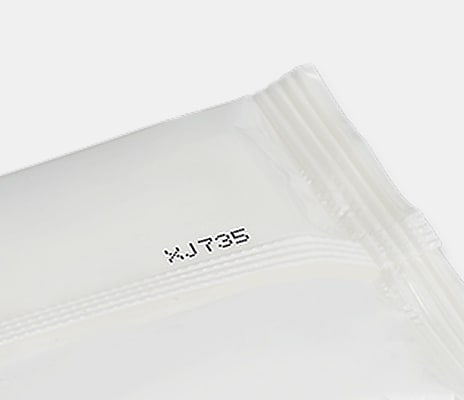
Form-filled packages
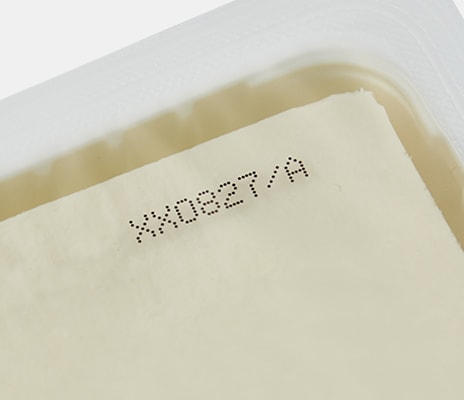
Packaging films
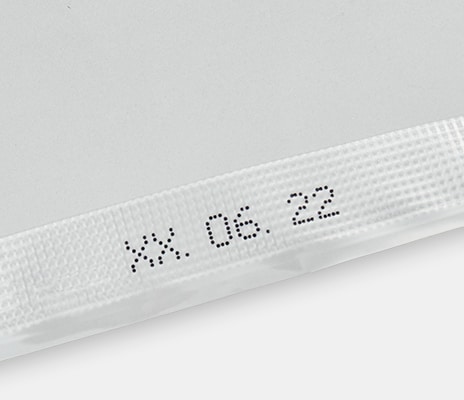
Pouches
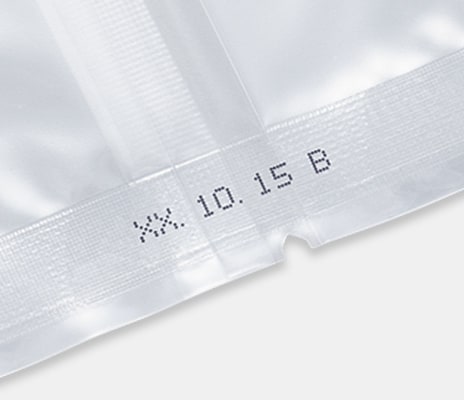
Heat-sealed packages
Cartons
The MK-G Series provides clear marks on flat and curved cartons, such as expiration dates and other unique identifiers from the manufacturer.
Glass Bottles and Jars
Often used to store perishable foods, glass bottles and jars require legible expiration dates and lot codes. The MK-G Series printers achieve this at high speeds for mass production.
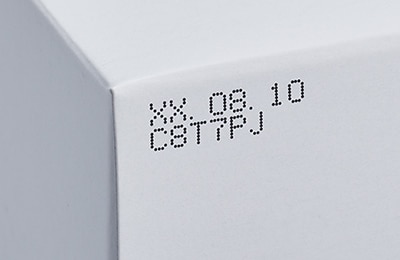
Cartons
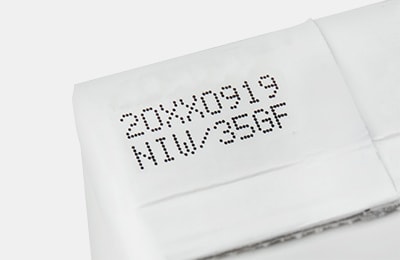
Cartons
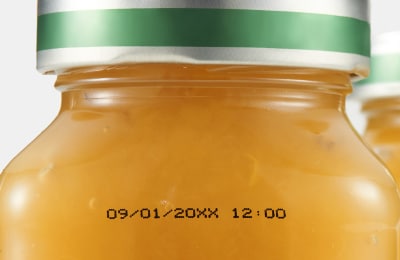
Glass bottles

Supporting Traceability and Food Safety
Fresh produce traceability printing links each package to production data that follows it beyond the packaging line. However, verification of the marking often happens well after printing. In produce operations, codes may be checked during pallet building. They can also be checked during intake at cold storage or after extended transport.
Under those circumstances, traceability depends on durability as much as accuracy because codes that fade or lose contrast introduce uncertainty once scanning or manual checks are required. All reliable inkjet coding for fruit and veg packaging supports food safety practices by keeping product information accessible as products move through handling, storage, and delivery, even as environmental conditions shift between stages.
Why Continuous Inkjet Fits Produce Packaging
Inkjet coding for fruit and veg packaging is often used because packaging conditions rarely stay the same from one run to the next. As formats change, product positioning shifts, and materials behave differently once they reach the coder.
Printers for fruit and vegetable coding, like the MK-G Series, apply variable data at production speed without having to rely on fixed alignment. Equipment stays in place as schedules and product lines shift during the day. On high‑speed CIJ for produce bag lines, changes often follow incoming product rather than preset run plans.
To ensure consistent traceability and keep up with shifting production conditions, secure produce traceability codes now and streamline your packaging process.

FAQs About Date Coding in the Fruit and Vegetable Packaging Industry
Can CIJ Coding Withstand the Environmental Conditions in Produce Packaging Facilities?
Yes, IP-rated controller and print head offer unprecedented durability in the wet and dirty environmental conditions found around produce. Sensors also monitor dot quality 10 times per second to ensure consistent print quality in all temperatures.
Why Is Lot/Date Coding Important for Fruits and Vegetables?
Lot/date coding ensures traceability, informs consumers of product age or expiration, and is essential for compliance in food manufacturing and production.
What Are the Regulatory Requirements for Coding on Fruit and Vegetable Packaging?
Regulatory requirements include traceability, accurate labeling of origin, expiration dates, lot numbers, and adherence to food safety and quality standards.
How Can Date Coding Help Comply with Traceability Regulations in the Fruits and Vegetable Packaging Industry?
Date coding aids traceability regulations by managing product recalls, identifying production issues in specific batches, and tracking the origin and timing of the product.
How Do KEYENCE CIJ Printers Ensure Minimal Downtime in Date Coding and Marking Fruit and Vegetable Packaging Operations?
A few unique features make this possible, such as real-time monitoring, hands-free cleaning, automatic maintenance and troubleshooting. KEYENCE CIJs detect changes in ambient temperature and adjust dot quality/breakpoint on the fly to maintain optimal print quality and printer performance. This constant adjustment significantly reduces print quality issues and dirty printheads severely reducing the frequency of cleaning and downtime. Then, in the event it is needed, the unit can perform self-diagnostics and clean itself without maintenance intervention.
Related Products
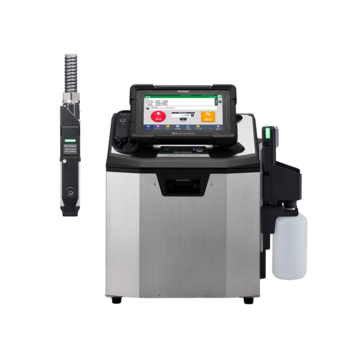
Related Downloads
-

Continuous Inkjet Printer Application Guide
This guide explains continuous inkjet (CIJ) printer applications together with pictures and illustrations. It contains many installation examples in various industries divided into food, medicine, and cosmetics; electrical machinery and electronics; and automotive, metal, and others. These examples show printing on targets specific to each industry.

![Process-specific Marking Applications [Food/Pharmaceutical Industry]](/img/asset/AS_133442_L.jpg)