Continuous Inkjet Printers / Case Coder
Inkjet Coding & Printing for Snack Manufacturing
Snack manufacturing continues to evolve as product varieties and packaging formats change. Lines that once ran a limited number of SKUs now, alongside endless new flavors, handle frequent changes in package size, materials, and batch volume. In this environment, coding on snack packaging has become part of the infrastructure rather than a finishing step. Inkjet printers for snacks production support this shift by applying all needed product information inline, without having to interrupt the flow or adding complexity to these demanding lines.
Modern snack production marking systems are expected to operate consistently across flexible films, sealed pouches, cartons, and rigid containers. As throughput expectations rise, coding for snack packaging systems must keep pace while maintaining legibility and stability throughout long production runs.
Key Features of Inkjet Printers That Benefit Snack Manufacturers
Snack lines place unique demands on coding equipment. Pouches and other packaging move quickly through production. Their surfaces vary from porous to non-porous, and any available space around sealing and filling equipment can be limited. Continuous inkjet (CIJ) printers for snacks production address these conditions through non-contact printing that applies codes without touching the package surface. This approach supports consistent results even when packaging moves at high speed or presents minor variations in position.
Inkjet systems also adapt well to the mix of materials found in snack operations. Films, bags, cartons, cans, and formed packages can all be coded in-line using the same core technology. These characteristics make industrial coding for snacks easier to integrate into existing production layouts without being disruptive to established workflows.
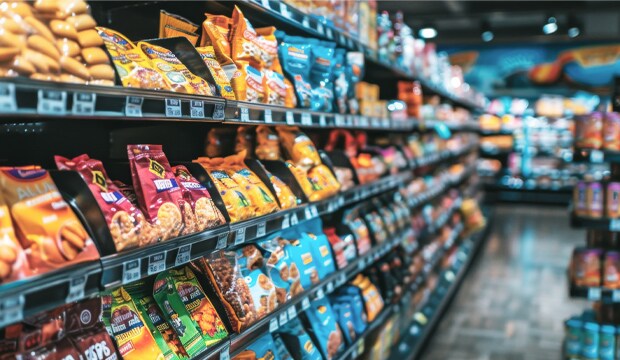
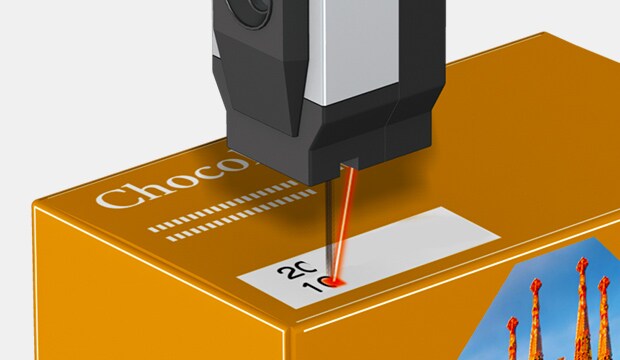
Lot/Date Coding and Marking on Snack Packaging and Pouches
The MK-G Series offers fast-drying ink for non-contact printing on:
- Jars
- Tins
- Cans
- Cartons
- Bags
- Pouches
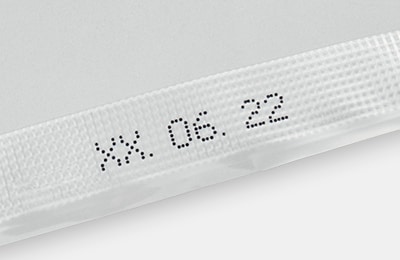
Pouches
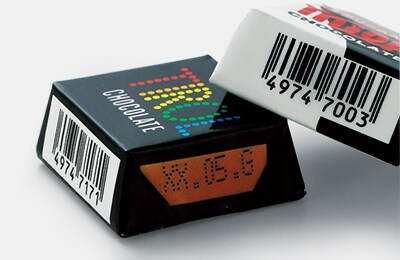
Packaging film
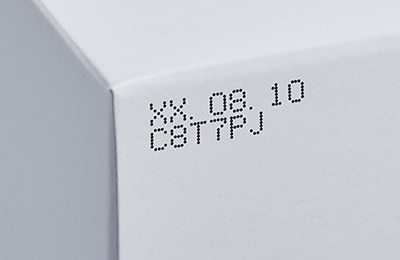
Cartons
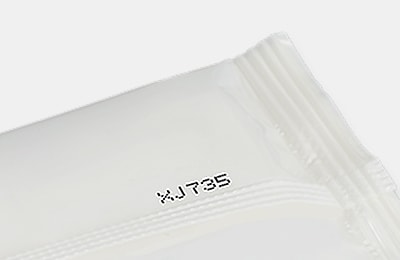
Form-filled packages

Heat-sealed packages
Its ink system reduces waste and solvents, while self-diagnostics enhance performance and minimize downtime. With its automatic ink particle optimization feature, the MK-G Series can ensure that every code is printed clearly and accurately, regardless of the shape. A viscosity sensor and conditioning tank system maintains stable print quality and prevents ink dilution, which is vital for accurate lot/date codes and avoiding recalls.
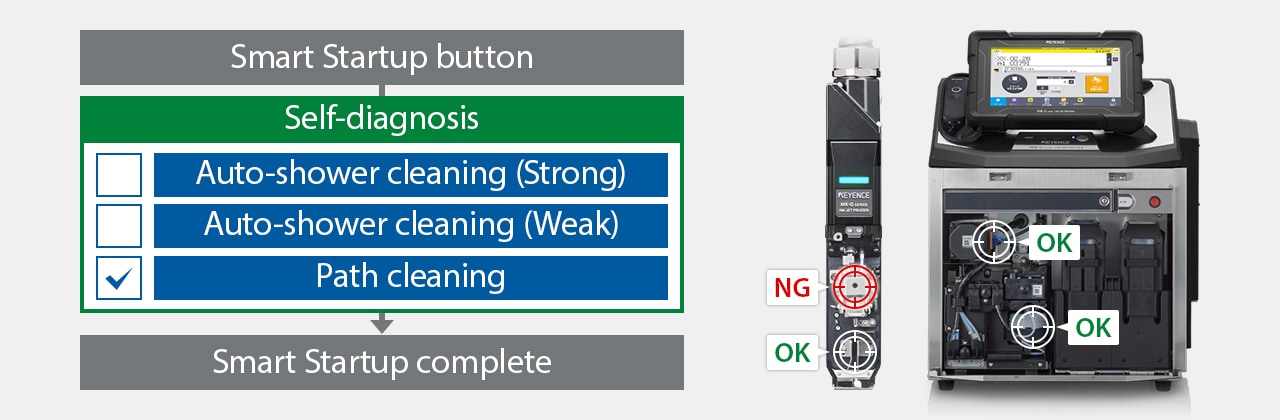
Using the MK Dock enables self-diagnosis and cleaning to ensure stable startup.
Enhancing Traceability and Labeling in Snack Production Line
Traceability plays a central role in snack manufacturing. This is particularly true when production volumes are high and distribution networks are wide. Snack packaging date coding and lot identification allow manufacturers to track products through production, storage, and shipment.
Inline inkjet coding supports this process by updating variable information directly at the point of packaging. Date and lot data can change automatically as production progresses, reducing reliance on pre-printed materials and lowering the risk of mismatched information. For coding solutions for snack manufacturers, this capability supports both operational control and downstream visibility without adding steps to the line.
Meeting Industry Standards with KEYENCE Inkjet Solutions
Snack packaging moves through a gauntlet of traceable steps before reaching retailers. Throughout that lifecycle, all the necessary printed information must remain readable by both humans and machines. Inkjet coding supports this requirement by producing marks that withstand routine exposure to moisture/temperature variation, and that can handle the stresses that are common in snack distribution.
Modern inkjet systems, like the MK-G Series from KEYENCE, incorporate monitoring functions that help maintain print quality over extended runs and by reducing variation caused by ink condition or startup behavior, these systems support reliable output across shifts and product changes.
Boosting Production Throughput in Snack Manufacturing
Throughput has to remain a primary consideration when snack producers evaluate production equipment. Typically, they are dealing with coding systems that interrupt flow, require frequent intervention, or struggle during long runs, which can quickly become bottlenecks. Inkjet printers for snacks production support throughput by operating continuously alongside filling and sealing equipment, and because codes are applied without contact and without mechanical application steps, these inkjet systems avoid many of the stoppages associated with alternative marking methods. Automated cleaning and diagnostic functions also further reduce unplanned downtime, which allows operators to focus on line performance rather than printer maintenance.
Let us help you optimize your snack production line—contact us for a consultation today.

FAQs
How Can KEYENCE Inkjet Printers Enhance Labeling in Snack Manufacturing?
KEYENCE inkjet printers apply date and lot information inline on snack packaging, supporting clear codes across a range of packaging materials at production speed.
How Does KEYENCE Technology Help with Product Traceability in Snack Production?
Inline printing of variable data allows snack manufacturers to track batches through production and distribution without relying on pre-printed materials.
What Specific Challenges Do Snack Producers Face When Using Traditional Printers?
Traditional printers can require additional handling or adjustments when packaging formats need to change, as well as having issues maintaining consistent code placement and legibility at higher line speeds, particularly on flexible snack packaging.

Related Products
Related Downloads
-

Continuous Inkjet Printer Application Guide
This guide explains continuous inkjet (CIJ) printer applications together with pictures and illustrations. It contains many installation examples in various industries divided into food, medicine, and cosmetics; electrical machinery and electronics; and automotive, metal, and others. These examples show printing on targets specific to each industry.

![Process-specific Marking Applications [Food/Pharmaceutical Industry]](/img/asset/AS_133442_L.jpg)