Continuous Inkjet Printers / Case Coder
Industrial Inkjet Print Samples
Key Takeaways
- CIJ (continuous inkjet) excels for variable data on curved or uneven substrates—bottles, films, metal—at production speed.
- Case coders (large-character) are optimal for corrugate outer cases—large barcodes and pallet tracking with high scan reliability.
- Ink formulation must match substrate: fast-drying for glass/metal/PET, pigmented for dark films, high-adhesion for smooth metals.
- Inspect print samples and run demos to verify readability, barcode scan rates, and adhesion before deployment on the line.
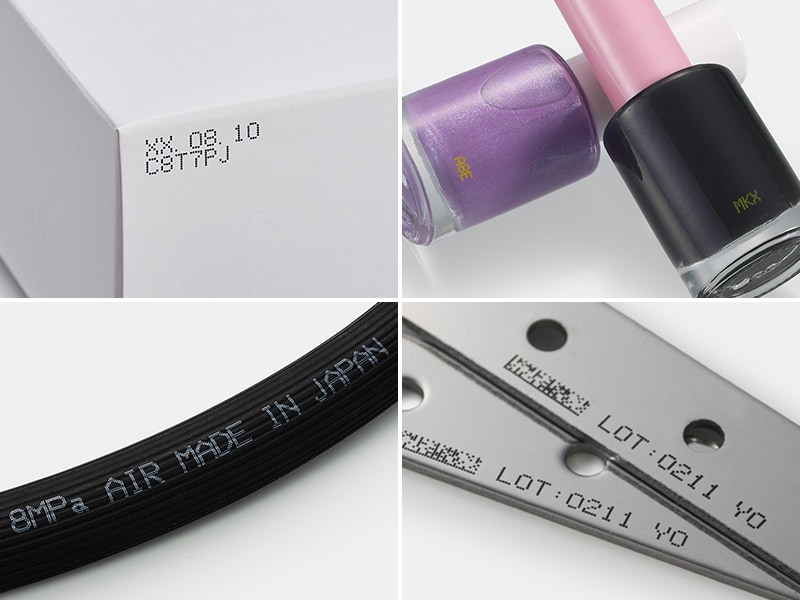
From PET bottles to corrugate cartons and metal components, printed codes travel with the product. Most industries use some kind of inkjet marking system in their production lines. Industrial inkjet print samples demonstrate how those markings look when they are moving at production speed and after downstream handling.
Packaging print samples remains the most common application; everything from bottles and cans to cartons and pouches has to carry a lot of information and barcodes. These marks have to remain legible after handling and transport. At the same time, industrial inkjet print samples also extend beyond food and beverage and into electronics and building materials.

Continuous Inkjet (CIJ) Printing Samples
In continuous inkjet technology, a pressurized ink stream breaks into droplets that are selectively charged and deposited onto a substrate. The printhead remains offset from the surface, which helps maintain a consistent marking as the product moves along a production line.
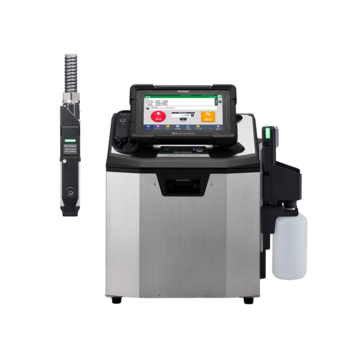
As the printhead can project droplets from a variety of distances, CIJ systems, like the MK-G Series by KEYENCE, are well-suited for curved and uneven surfaces. Industrial inkjet print samples produced by CIJ printing commonly include multi-line date codes and small bar codes. The ability to update data in real time makes this approach practical for lines that often change SKUs or if production runs change frequently.
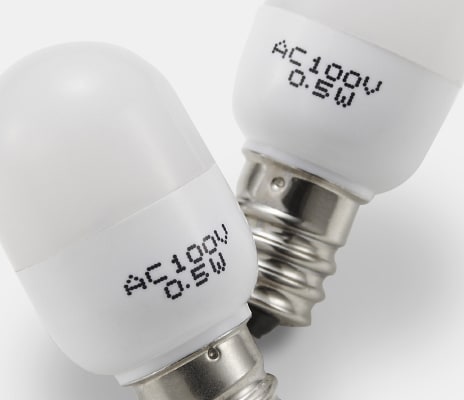
LED
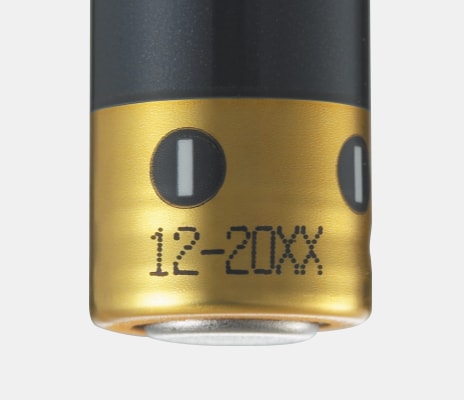
Dry battery
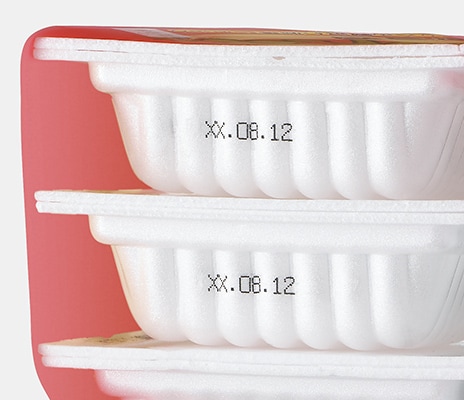
Food packaging
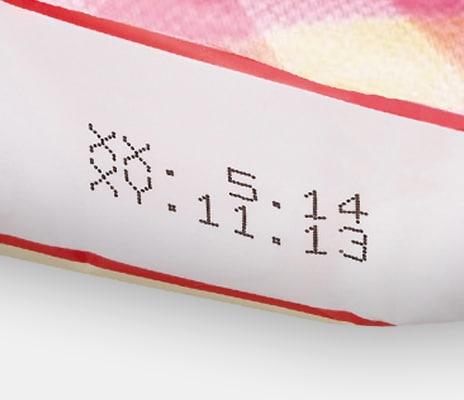
Packaging film
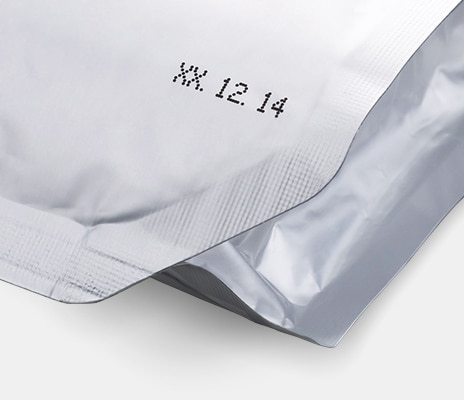
Aluminum pouch
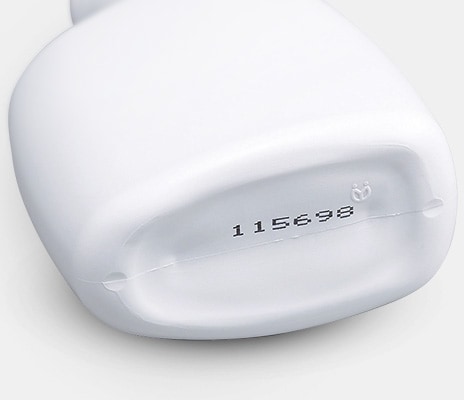
Resin bottle
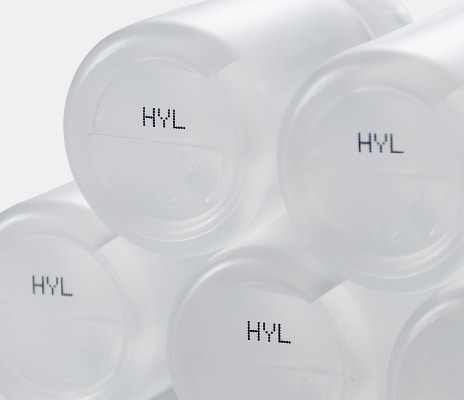
Plastic bottle
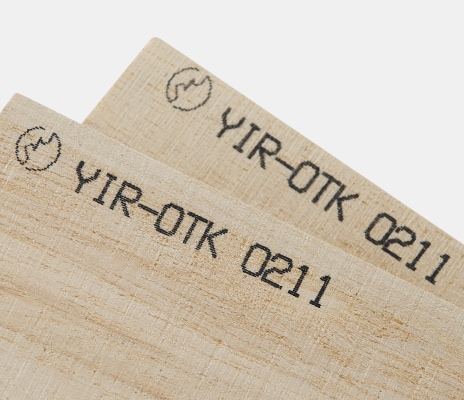
Wood
CIJ Printers for Packaging, Bottles, and Products
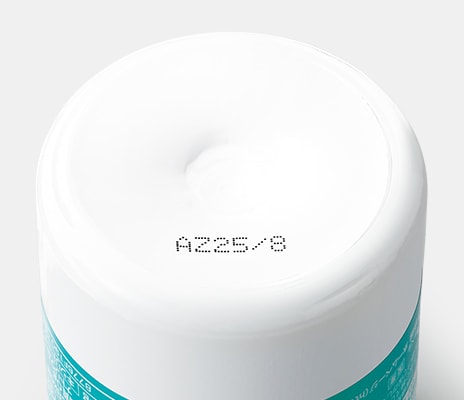
Packaging print samples help demonstrate how codes appear on finished goods under actual production conditions. Beverage bottles often carry expiration dates on curved PET or glass surfaces where condensation may present itself. For example, aluminum cans (a non-porous surface) require a fast-drying ink that is resistant to smudging and smearing during after-print handling.
Coded data samples in these environments typically include:
- Expiration dates and best-before information
- Lot and batch identifiers
- Time stamps and shift codes
- 1D barcodes and 2D codes
- Simple logos or brand marks
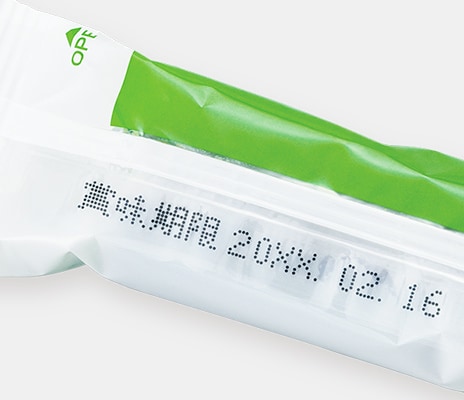
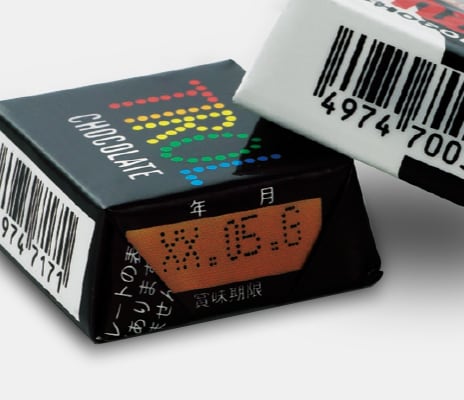
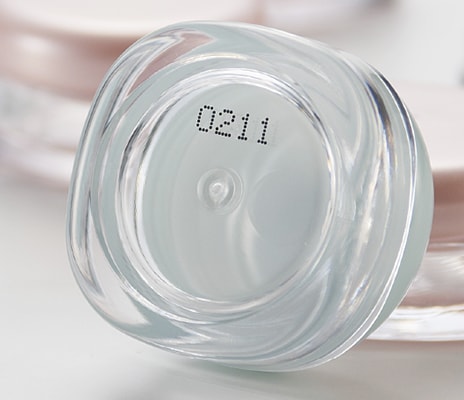
CIJ technology can adapt to substrates by using inks formulated for their adhesion on plastics, metals, and coated cartons. Pigmented inks are able to provide high contrast on dark films or caps, while fast-drying inks help maintain legibility on non-porous packaging.
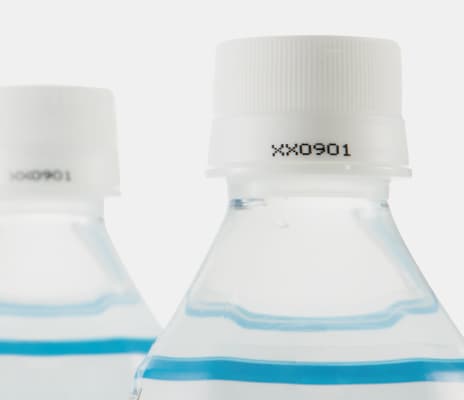
PET bottle
Snack case
Snack packaging film
Packaging film
Cosmetic container
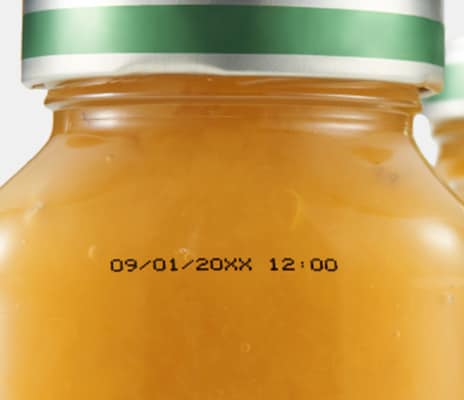
Jar
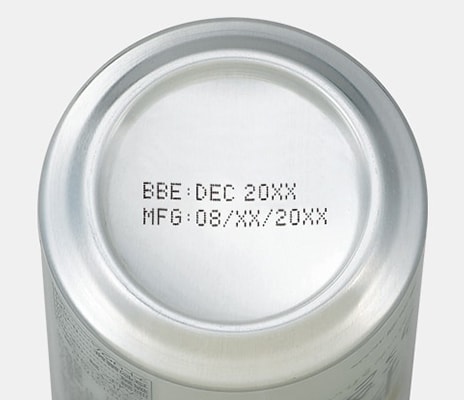
Aluminum can
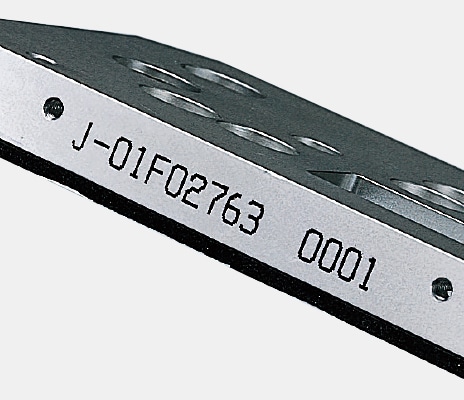
Aluminum
Case Coders (Large Character Inkjet) for Outer Case Coding
Outer cases require larger characters to be printed on them than primary packages. Corrugate surfaces vary in texture and absorbency, and when boxes move through high-speed conveyors, the markings have to hold up. Barcode and logo print samples on shipping cartons have to maintain consistent line thickness and spacing to pass scanner verification at distribution centers.
Large character inkjet systems address these conditions by printing high-resolution codes from a greater throw distance, reducing the risk of contact with uneven box flaps and limits ink splashback. Industrial inkjet print samples on cartons typically include:
- Large, pallet-tracking barcodes
- Production descriptions
- Quantity counts
- Distribution data and codes
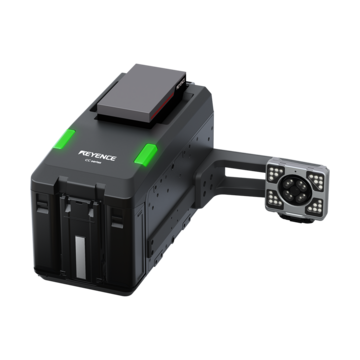
CIJ printers, like the CC-1000 Series, also have integrated inspection features that can verify how readable a marking is immediately after printing without delay. In high-volume operations, this supports the smooth flow of production to the warehouse without needing manual spot checks.
CIJ vs. Case Coders for Industrial Production Lines
CIJ print sample and case coder sample printers serve different roles within the same facility. Typically, CIJ systems will focus on primary packaging and small character markings where compact messages and variable data are needed. Case coders can handle the outer cartons where message size and scan reliability are the priority.
Continuous inkjet technology is commonly selected for bottles, cans, films, and metal parts. Case coders are positioned further down the production line to mark corrugate trays and shipping boxes. Together, they create a connection ID system that tracks individual products and pallets. Reviewing industrial inkjet print samples across both stages to help provide clarity as to which technology can align with each need along the line.

Industrial Parts and Component Print Samples
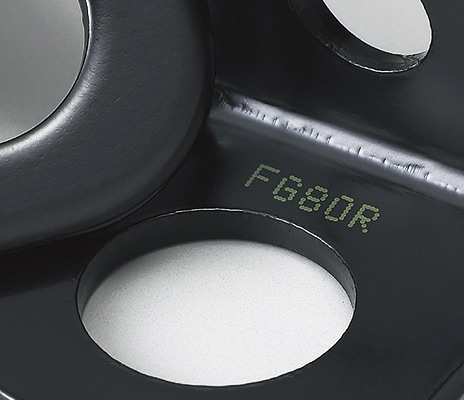
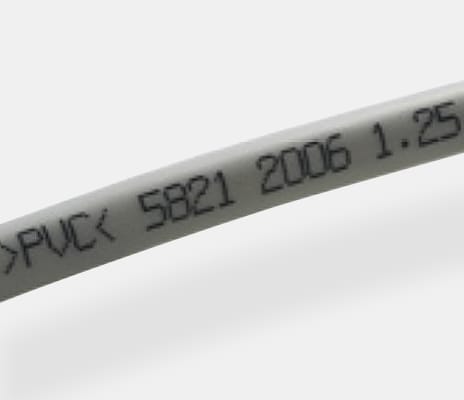
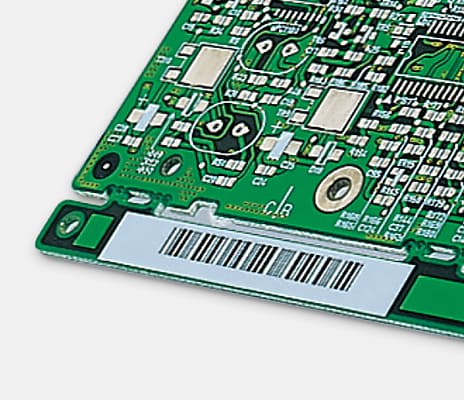
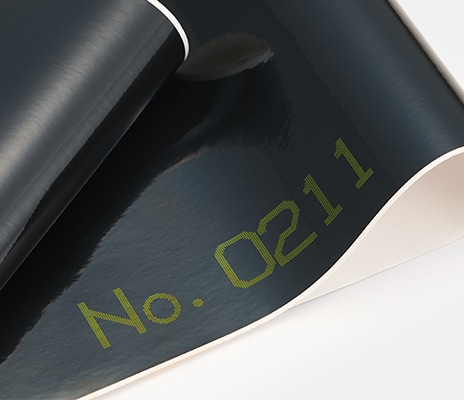
Industrial inkjet print samples are not just limited to packaging. Many manufacturers apply codes directly to parts and components. Parts like automotive brackets, plated metal housings, and extruded pipes often require serial numbers or production identifiers.
These CIJ print samples require a smaller character size or higher contrast inks, depending on the substrate. Smooth metal surfaces are going to require a strong adhesion for the ink to hold to, and rough extrusions may require bolder characters.
Automotive parts
Cable
PCB
Black film
Inkjet Printing on Different Materials
Regardless of industry, inkjet printing performance varies by surface type. Non-porous materials such as glass, PET, and aluminum require fast-drying inks that resist transfer. Porous substrates like corrugated affect edge sharpness and barcode readability. Coated cartons and laminated films also require their own special formulations of inks.
Reviewing packaging print samples and CIJ print samples across different materials highlights how continuous inkjet technology adapts to different substrates while maintaining consistent data.
To see how this technology performs across a range of materials, watch continuous inkjet printers and case coders in action with KEYENCE today.
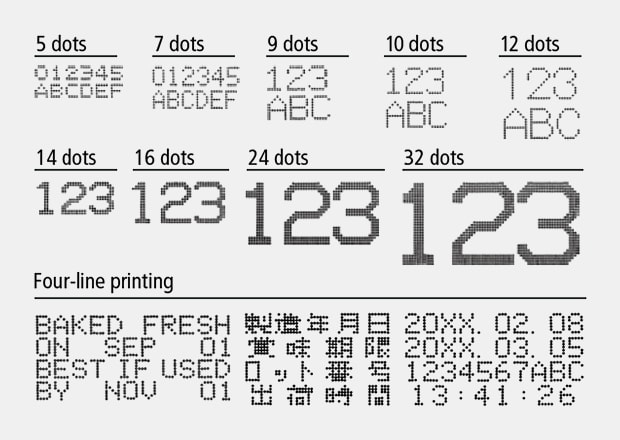
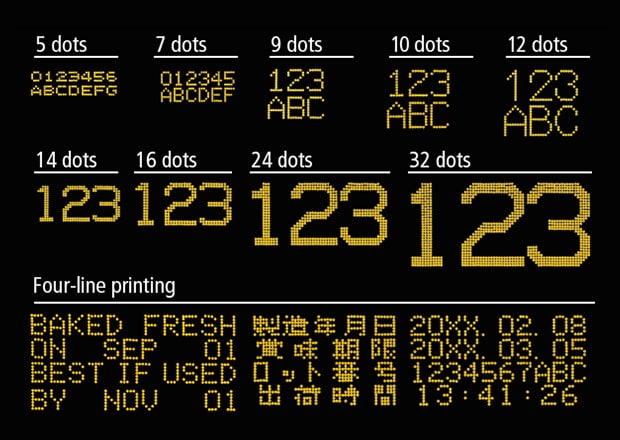
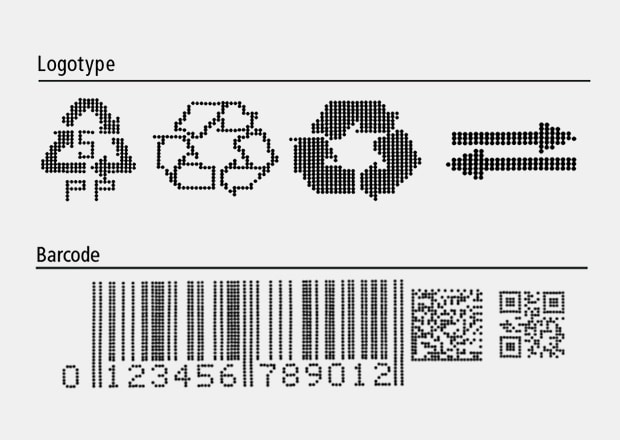
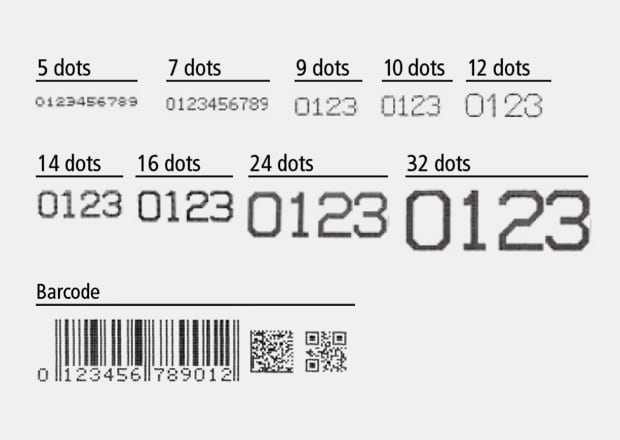
40 μm 1.57 Mil nozzle (small character type)

Related Products
Related Downloads
-
![Inkjet Printer Tech Guide [BASIC KNOWLEDGE EDITION]](/img/asset/AS_114378_L.jpg)
Inkjet Printer Tech Guide [BASIC KNOWLEDGE EDITION]
Continuous inkjet (CIJ) printers work by discharging ink particles to print information such as characters and figures on targets. This document describes the differences between industrial use inkjet printers and office-use printers, as well as their structures, circulation principles, and application examples.