Continuous Inkjet Printers / Case Coder
Understanding Inkjet Printer Ink Characteristics
Key Takeaways
- Ink selection affects code durability, readability, and print quality.
- Different ink formulations are designed for different materials and applications.
- Fast-drying inks help maintain code quality on high-speed production lines.
- Environmental resistance and regulatory requirements should be considered when choosing ink.
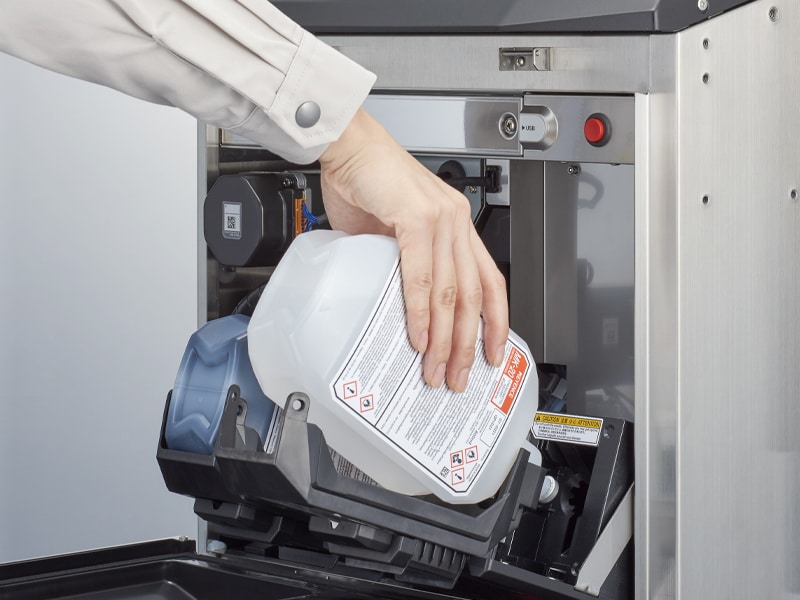
Regardless of industry, industrial marking solutions have to operate in environments where printed codes move quickly from one stage of production to the next. All barcodes, batch numbers, and expiration dates must remain readable throughout all stages. The performance of a coding system depends not only on the printer, but also on the ink running through it.
Understanding inkjet ink characteristics (adhesion, drying, contrast, and environmental resistance) is essential for manufacturers to evaluate how a marking solution will perform on the production line, influencing marking durability and readability.
FAQs
Q1. What Types of Ink Are Available?
Q2. What Sort of Materials Can Be Printed On?
Q3. What Are the Components of the Ink?
Q4. Do Printed Characters Fade?
Q5. Is the Ink Water-Soluble?
Q6. Is the Ink Subject to PRTR Laws?
Q7. Is the Ink Treated as a Poisonous or Deleterious Substance?
Q8. Approximately How Many Characters Can Be Printed with a Single Ink Cartridge?
Q9. Does the Ink Have an Expiration Date?
Q10. How Do I Store Ink?
Q11. What Should I Do When I Get Ink in My Eyes?
Q12. How Do I Dispose of Ink Waste?
Q1. What Types of Ink Are Available?
- MK-10 / Standard ink
This is a standard type of industrial ink that can be used for general purposes in a variety of industries. - MK-14 / MEK-free ink
MEK is not included in the ink components, which reduces chemical odor and provides an alternative ink for compliance with certain safety standards. - MK-30 / Yellow ink
By using ink with yellow pigment, clear printing is possible on black workpieces. This enables highly visible printing on black-coated automotive parts and black resin-molded products. - MK-33 / White ink
Pigment-type ink for greatly improved maintenance.
Q2. What Sort of Materials Can Be Printed On?
Industrial-use inkjet printers can print on a wide variety of materials such as metals, resins, glass, packing films, cans, and PET bottles.
In order to print on products moving on production lines, quick-drying ink, which dries in approximately 1 second, is used. This enables printing on materials other than just highly absorbent ones, such as paper and cardboard. As such, these printers are used in a wide range of applications in the food, medical, cosmetic, electrical and electronic component, transportation, and metal industries.
Material examples
- Containers and packaging materials: Porous materials (paper, roll paper, cardboard, paper bags, textiles, etc.), nonporous materials (glass, aluminum cans, PET bottles, wrapping film, pottery, ceramics, etc.)
- Building materials: Lumber, plaster boards, piping (polyvinyl chloride pipes), aluminum sashes, etc.
- Electrical, electronic, mechanical, and automotive parts: Resin-molded products, molded products, metal-worked products, cast products, etc.
Surface shape examples
- Curved, cylindrical, and rough surfaces: Batteries, LEDs, bottles, aluminum wheels
- Spherical and elliptical surfaces: Golf balls, light bulbs, eggs, etc.
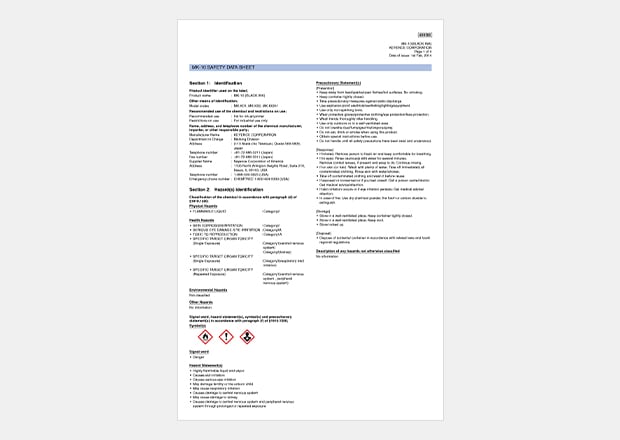
SDS (example)
Q3. What Are the Components of the Ink?
View the SDS (Safety Data Sheet) for each ink and solvent.
What is an SDS (Safety Data Sheet)?
This is a document that provides information regarding the characteristics and handling of chemical substances that may be hazardous. It is presented when transferring control to another user or when providing a user with a product that includes these chemical substances.
* These were previously referred to as MSDS (Material Safety Data Sheets). However, the name was unified to SDS, which is the abbreviation prescribed by the UN GHS (Globally Harmonized System of Classification and Labeling of Chemicals), in April 2012.
SDS contents
- Identification of the substance/mixture and of the company/undertaking
Product identifier, as well as the name, address, and telephone number of the supplier of the SDS - Hazards identification
- Composition/information on ingredients
Names of included designated chemical substances, as well as classification and content by percentage of designated chemical substances (two significant digits) - First aid measures
- Firefighting measures
- Accidental release measures
- Handling and storage
- Exposure controls/personal protection
- Physical and chemical properties
- Stability and reactivity
- Toxicological information
- Ecological information
- Disposal considerations
- Transport information
- Regulatory information
- Other information
Q4. Do Printed Characters Fade?
Inkjet printers can print on a variety of materials, but ink rubs off easily from some materials, such as poly resins (PP and PE), glass, and rubber.
We have prepared a super-adhesive type of ink (MK-13) for materials to which the standard ink does not adhere well. By improving the binders, which are the adhesive components of this ink, we have improved its adhesive capability even for materials other than poly materials.
Conventional Ink

Weak adhesion
Super-adhesive Ink

Strong adhesion
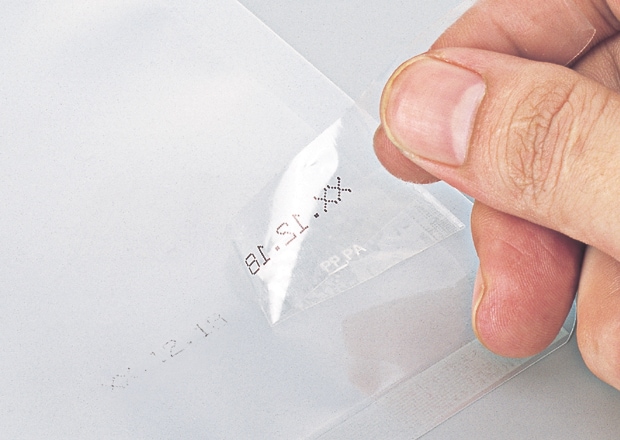
Conventional inkjet printer ink can be peeled off with a piece of tape.
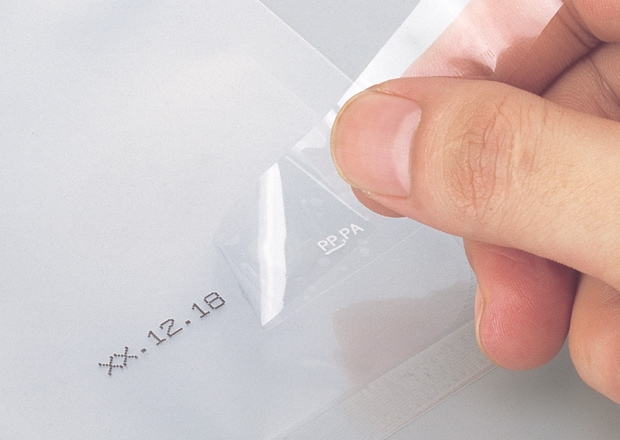
Super-adhesive ink firmaly adheres to the suface.
Materials that are easy to print on
| Material name | Inkjet printer | |
|---|---|---|
| Resin | PE (polyethylene) | Good |
| PC (polycarbonate) | Excellent | |
| PP (polypropylene) | Good | |
| POM (polyacetal) | Excellent | |
| PBT (polybutylene terephthalate) | Excellent | |
| PET (polyethylene terephthalate) | Excellent | |
| ABS (acrylonitrile butadiene styrene) | Excellent | |
| EP (epoxy) | Excellent | |
| PF (phenol) | Excellent | |
| UF (urea) | Acceptable | |
| PVC (vinyl chloride) | Excellent | |
| PA (polyamide) | Excellent | |
| SI (silicon) | Good | |
| Metal | Iron | Excellent |
| Aluminum | Excellent | |
| Nickel | Excellent | |
| Stainless steel | Excellent | |
| Copper | Excellent | |
| Gold | Excellent | |
| Other | Ceramic | Excellent |
| Wood | Excellent | |
| Paper | Excellent | |
| Glass | Good | |
| Rubber | Good |
Q5. Is the Ink Water-Soluble?
The MEK ink is not water-soluble, but the MEK-free ink is water-soluble.
Differences between water-soluble and non-water-soluble ink
The risk of fire for water-soluble ink is half the risk for non-water-soluble ink. This is because particles with a small relative weight are difficult to dissolve in water. Particles with a low relative weight can then rise to the surface of the liquid, easily flowing out and spreading when water is used to put out a fire on this ink.
| Non-water-soluble (MEK ink) | Water-soluble (MEK-free ink) | |
|---|---|---|
| Specified quantity | 200L | 400L |
* The information shown above is an example of equally hazardous volumes of ink.
Q6. Is the Ink Subject to PRTR Laws?
The ink is not subject to PRTR laws because, although it contains trivalent chrome alloy and toluene, which are type 1 designation chemical substances according to PRTR laws, they make up less than 1% of the total mass of the product (ink).
What are PRTR laws?
(Pollutant Release and Transfer Register)
These are laws related to the necessity of understanding, collecting, and making public data on harmful chemical substances. This data includes the origins of chemical substances, the amount of these substances that have been released into the environment, and whether they have been carried out of industrial facilities as components of waste material.
Q7. Is the Ink Treated as a Poisonous or Deleterious Substance?
MEK (methyl ethyl ketone) is specified as a deleterious substance, but this is not an active ingredient, so the ink is not treated as a deleterious or poisonous substance under the same law.
* Active ingredient refers to substances that are composed only of MEK, so MEK is judged not to be an active ingredient for mixtures such as ink and solvent.
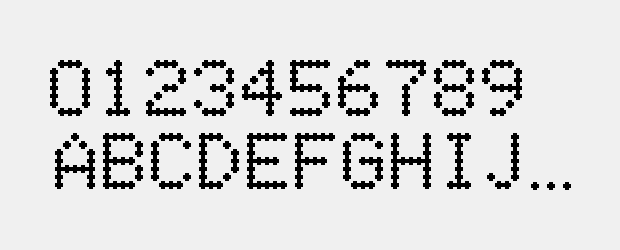
Q8. Approximately How Many Characters Can Be Printed with a Single Ink Cartridge?
Typical example
- 800 mL cartridge
MK-G1000 (standard model): Approx. 71 million characters
MK-G1100 (small character model): Approx. 200 million characters - 450 mL cartridge
MK-G1000 (standard model): Approx. 40 million characters
MK-G1100 (small character model): Approx. 110 million characters
* The number of characters explained here refers to the case when the character size is 7 × 5 dots (average number of drops used per character: 15).
Ink example
| Ink model | Type | Volume (cc) | Product (set) model | Number of cartridges |
|---|---|---|---|---|
| MK-10 (black ink) | Standard | 800 | MK-K01 | 1 |
| 800 | MK-K02 | 2 | ||
| 450 | MK-K02H | 3 |
Q9. Does the Ink Have an Expiration Date?
Useful life
The expiration date of the ink and solvent is 12 months after the cartridges are inserted into the inkjet printer. If you continue to use old ink that has passed its expiration date, the printing quality may deteriorate, and irregular maintenance may be necessary.
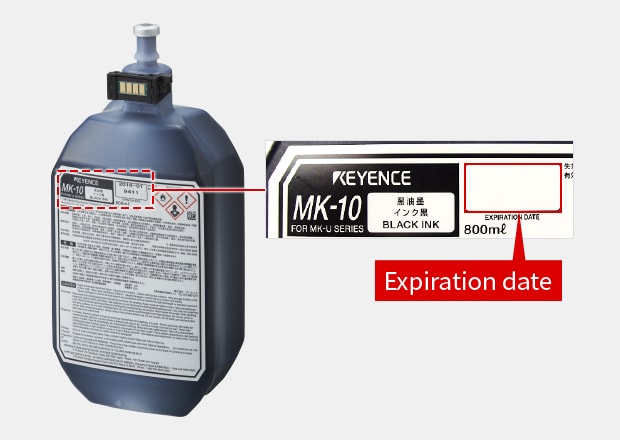
Equipped with an IC chip
Each cartridge is equipped with an IC chip. If the expiration date of the ink or solvent (written on the label) passes, the chip detects this and notifies the user of the need to replace the cartridge with a new one.
Q10. How Do I Store Ink?
Please store ink under the following conditions.
Recommended storage conditions
- Store in a cool, well-ventilated place, away from exposure to direct sunlight and rain.
- Keep away from fire and other heat sources.
- Seal the container for storage after opening.
- Do not place any substances that break down and produce oxygen nearby.
- Store under conditions in compliance with relevant laws and regulations.
- Keep in a locked location to prevent theft.
- Use the KEYENCE bottle to store the ink.
* The ink and solvent are volatile, flammable substances. Follow the local rules for storage and handling.
| Non-water-soluble (MEK ink) | Water-soluble (MEK-free ink) | |
|---|---|---|
| No notification required | Less than 40 L | Less than 80 L |
| Notification to a fire chief or fire station chief is required | 40 L or more | 80 L or more |
| Stored and handled in compliance with Fire Service Act requirements | 200 L or more | 400 L or more |
* Check with a representative at the local Labor Standards Inspection Office for final judgment.
Storage amount and notification
Please store ink under the following conditions.
- Notification is not required for an amount less than 1/5 of the statutory quantity, but manufacturers still have the obligation to store ink in compliance with the Fire Service Act.
- Notification to the fire chief or fire station chief is required for storing an amount of 1/5 of the statutory quantity or more, but within the statutory quantity.
- Storing or handling an amount over the statutory quantity is regulated by the Fire Service Act and other relevant laws. It is forbidden to store or handle ink and solvent in places other than designated storage/handling facilities.
Statutory quantity
Storing or handling of hazardous materials in an amount over the statutory quantity is regulated by the Fire Service Act and other relevant laws. It is forbidden to store or handle such materials in places other than designated manufacturing/storage/handling facilities.
Q11. What Should I Do When I Get Ink in My Eyes?
Wash your eyes immediately with cold or lukewarm water and consult a physician.
Warning
- Do not look into the ink-jetting nozzles while the equipment is in operation. Ink and solvent may be ejected and enter your eyes or mouth.
- When replacing consumable or service parts, be sure to stop the equipment before you start the replacement.
- When performing maintenance, such as cleaning or exchanging nozzles or replacing filters, always wear protective goggles to protect your eyes from possible ink or solvent projection.
Caution
- Wear appropriate protective gloves so that you do not come into direct contact with ink or solvent. Wash off any ink or solvent on your skin as soon as possible using soap and water.
Q12. How Do I Dispose of Ink Waste?
Ink waste falls under specially controlled industrial waste.
Waste Management and Public Cleansing Act (Disposal Act)
Ink, solvent, and ink waste fall under special controlled industrial waste (waste fluid). Please use the service of a specialized industrial waste disposal business operator certified by the prefectural governor.
Key Ink Characteristics in Industrial Printing
Several industrial ink properties determine how a code forms and how long it remains legible. Adhesion is one of the most important considerations as varying materials interact with inks differently. For example, porous materials absorb ink into the surface, while non-porous substrates rely on evaporation of the carrier fluid that helps the ink flow.
Ink composition also affects how consistently a printer operates, and some continuous inkjet (CIJ) ink types use dissolved colorants, while others contain suspended particles that provide opacity. These differences influence the behavior of the ink flow inside the printer and how sharply characters appear after printing.
Another factor to consider is how the ink performs during constant operation, as high-volume facilities often run CIJ systems constantly while printing thousands of codes each hour. Stable ink formulations can help provide consistent droplet formation and character quality across long and short production runs.
Drying Time and Production Speed
Fast conveyor line speeds necessitate quick-drying industrial, typically solvent-based, inks to prevent smearing. This is especially crucial for non-porous materials like plastic or coated films, where the ink must dry on the surface before contacting guide rails or belts.
Dry time also affects production efficiency. When markings are stabilized and dry, products can continue through filling and sealing without additional delays. For manufacturers running high-throughput lines, this behavior falls in line with consistent marking quality.
Chemical and Environmental Resistance
Codes that are printed during manufacturing runs rarely remain in controlled climates or conditions. Products may be subject to humidity, temperature variation, and repeated handling during packaging and distribution. Ink durability in industrial printing becomes an important detail when taking into consideration that markings have to stay legible and readable through that lifecycle.
Certain CIJ ink types are formulated to resist any environmental exposure. Some inks tolerate contact with oils or cleaning fluids better than others, while different inks remain visible after exposure to moisture or ultraviolet light. These characteristics help prevent fading or smudging that could interfere with traceability.
Additionally, the processes of production may also place additional stress on printed codes. Containers filled with hot liquids, for example, may pass through washdown or sterilization steps. In these environments, the ink formulation must adhere securely to the surface so printed information remains intact.
Ink Color, Contrast, and Barcode Readability
The color selection of fast-drying industrial ink affects how easily operators and scanning equipment can read a code. The contrast between the printed mark and the product’s surface is a determining factor as to whether characters and barcodes are clearly defined.
Some CIJ ink types, like pigment-based inks, provide a stronger visibility on dark or reflective materials. These inks are suspended in a solution to make an opaque mark that stands out against darker backgrounds. In comparison, dye-based inks produce smooth marking that appears sharp on lighter surfaces.
Selecting the Right CIJ Ink Type for Your Application
Choosing among the different CIJ ink types begins with evaluating the product surface and materials like polyethylene, aluminum, glass, and coated cartons, all of which interact with those inks differently. There are also further adhesion issues when it comes to surface treatment, coating, or residual oils from manufacturing.
Environmental conditions, like humidity, refrigeration, or dusty rooms, should also be considered, as they can affect drying behavior and long-term durability.
Another factor to consider in selecting the right CIJ ink type is the point at which the printed carton or other material comes in contact with other equipment. If products reach conveyor belts or packaging components immediately after printing, a fast-drying industrial ink can help maintain code clarity.
By examining all substrate characteristics, production conditions, and visibility requirements, manufacturers can evaluate their options and narrow the field of potential inks to those that match their exact marking systems. Understanding inkjet printer ink characteristics allows production teams to keep their CIJ ink selection in line with real manufacturing conditions.
Consult with a marking specialist to select the right ink formulation for your substrate and production conditions. Contact KEYENCE today.

Related Products
Related Downloads
-
Continuous Inkjet Printer Application Guide
This guide explains continuous inkjet (CIJ) printer applications together with pictures and illustrations. It contains many installation examples in various industries divided into food, medicine, and cosmetics; electrical machinery and electronics; and automotive, metal, and others. These examples show printing on targets specific to each industry.